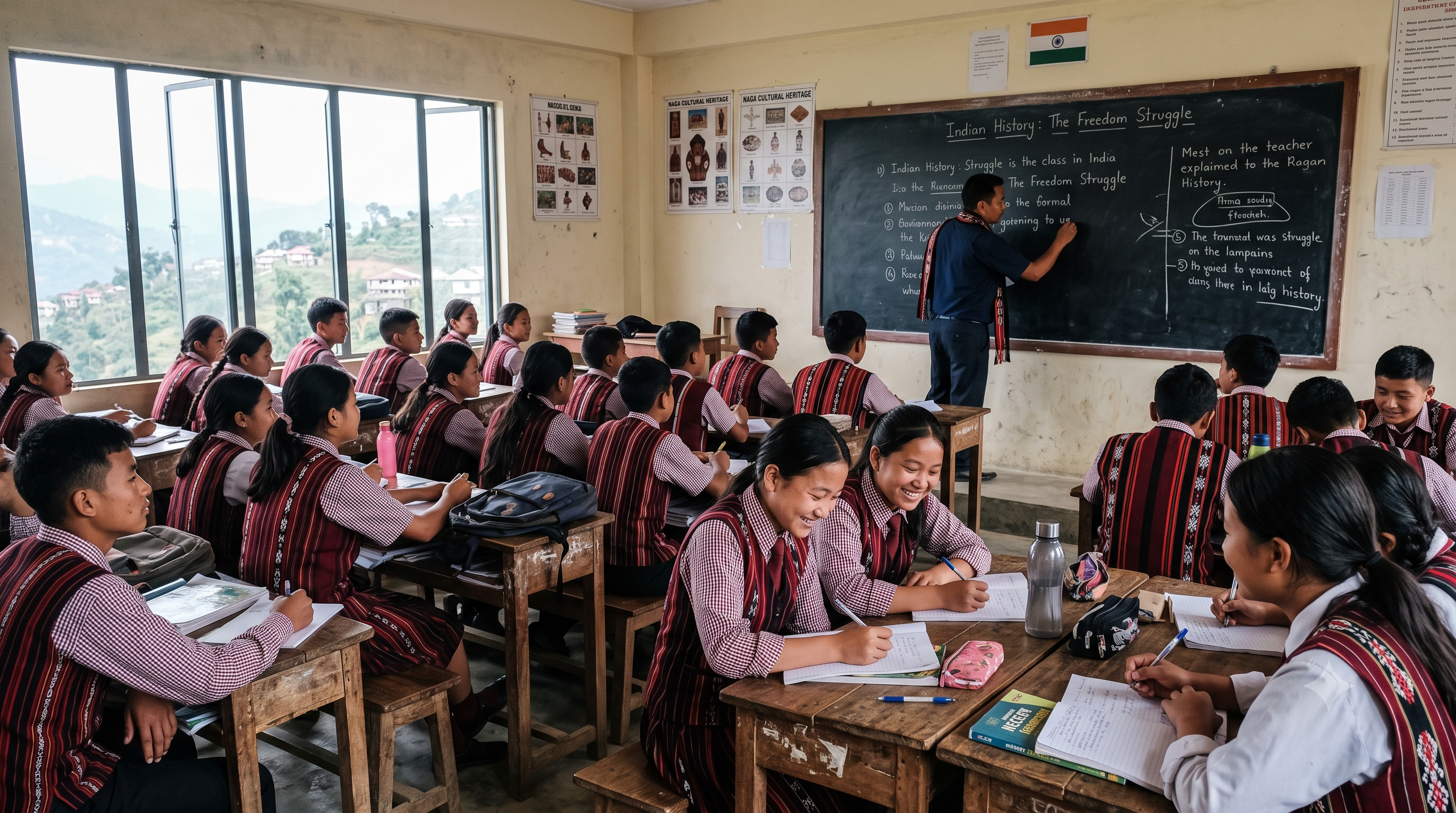
Most apps are built for the flat streets of Bangalore or San Francisco. It's time we built digital experiences that actually understand the geography and soul of the Naga hills.
The "Blue Dot" Problem in Dimapur
Have you ever tried to order a delivery or set a location pin while standing in a winding colony in Dimapur or a steep street in Kohima? You watch that little blue dot on Google Maps jump from one rooftop to another, completely confused by the terrain.
This is what I call the "Flatland Bias." Most of the apps we use every day—Zomato, Uber, even global banking apps—were designed by people sitting in "flat" cities like Bangalore, Delhi, or San Francisco. They assume every house has a numbered street address, every user has 5G speed, and every interaction happens in English or Hindi.
But as we know, Nagaland is different. In 2026, we are reaching a tipping point where "copy-pasting" Western or Metro-Indian designs simply isn't working for our people. We need designers who don't just know how to use Figma, but who know what it’s like to find a house using "the yellow gate near the church" as a landmark.
1. Geography is UX (User Experience)
In the hills, a distance of 2 kilometers on a map isn't the same as 2 kilometers on the ground. A "local" UI/UX designer understands that a delivery app for Nagaland needs to account for verticality and landmarks, not just GPS coordinates.
When we teach Design at instudia, we challenge our students: How would you build a location picker for someone in a village where there are no street names? * The Global Solution: Enter your pin code and house number. (Fails in 60% of Nagaland).
2. The Rise of "Hyper-Local Vernacular"
2026 is the year of Vernacular-First Design. We are seeing a massive trend where "Desi is Cool." Apps like Meesho and ShareChat have proven that users in Tier-II and Tier-III cities want interfaces that feel like home.
For Nagaland, this means more than just translating "Submit" to "Inyushia." It means using Naga Motifs—the geometry of our weaves, the colors of our traditional attire—in a way that feels modern and "hype," not just like a souvenir shop.
Imagine a banking app that uses the iconography of a Morung to represent "Security" or "Community Savings." This isn't just about aesthetics; it’s about Trust. If an app looks and feels like it belongs to our culture, our elders are far more likely to use it without fear.
3. Designing for the "Offline-First" Reality
Even in 2026, with 5G expanding, we still have "shadow zones" in our districts. A designer from Mumbai might build an app that breaks the moment the signal drops.
A Naga UI/UX designer knows better. They build for "Graceful Degradation." They ensure that if a student is using a Syllabus Mapper app or a farmer is using Naga Organic, the core functions work offline and sync silently when they reach a hilltop with a signal. This kind of empathy can't be taught in a textbook; it has to be lived.
The Opportunity: Beyond the Screen
At instudia, I see brilliant students working on projects that solve real Naga problems.
These aren't just "student projects." They are the blueprints for the future of our state's digital economy.
My Message to Aspiring Designers
UI/UX is often called the "soft side" of tech, but I disagree. It is the most human side.
If you are a creative Naga youth who loves art but wants to work in technology, UI/UX is your calling. You don't need to be a math genius to be a great designer. You need to be an observer. You need to look at how your parents use their phones, how local shops manage their accounts, and how we talk to each other in our mother tongues. Read our guide on why learn graphic design in 2025 and check out our portfolio building guide for beginners.
At instudia, our hands-on UI/UX Designing Track and Graphic Designing Program pair design fundamentals with practical frontend skills (Frontend Web Development). You can also benchmark creative career salaries with our Nagaland Tech Salary Tool.
Nagaland doesn't just need more coders; we need Digital Architects who can build a home for us in the cloud. Feel free to explore our design courses or contact our design faculty.
Do you think local apps should use more tribal motifs, or should they stay strictly minimal?

instudia Editorial Team
Academic & Career Team
ISO Certified Skill Institute
Official articles and curriculum guides prepared by instudia faculty and industry mentors in Dimapur.
Relevant Courses at Instudia