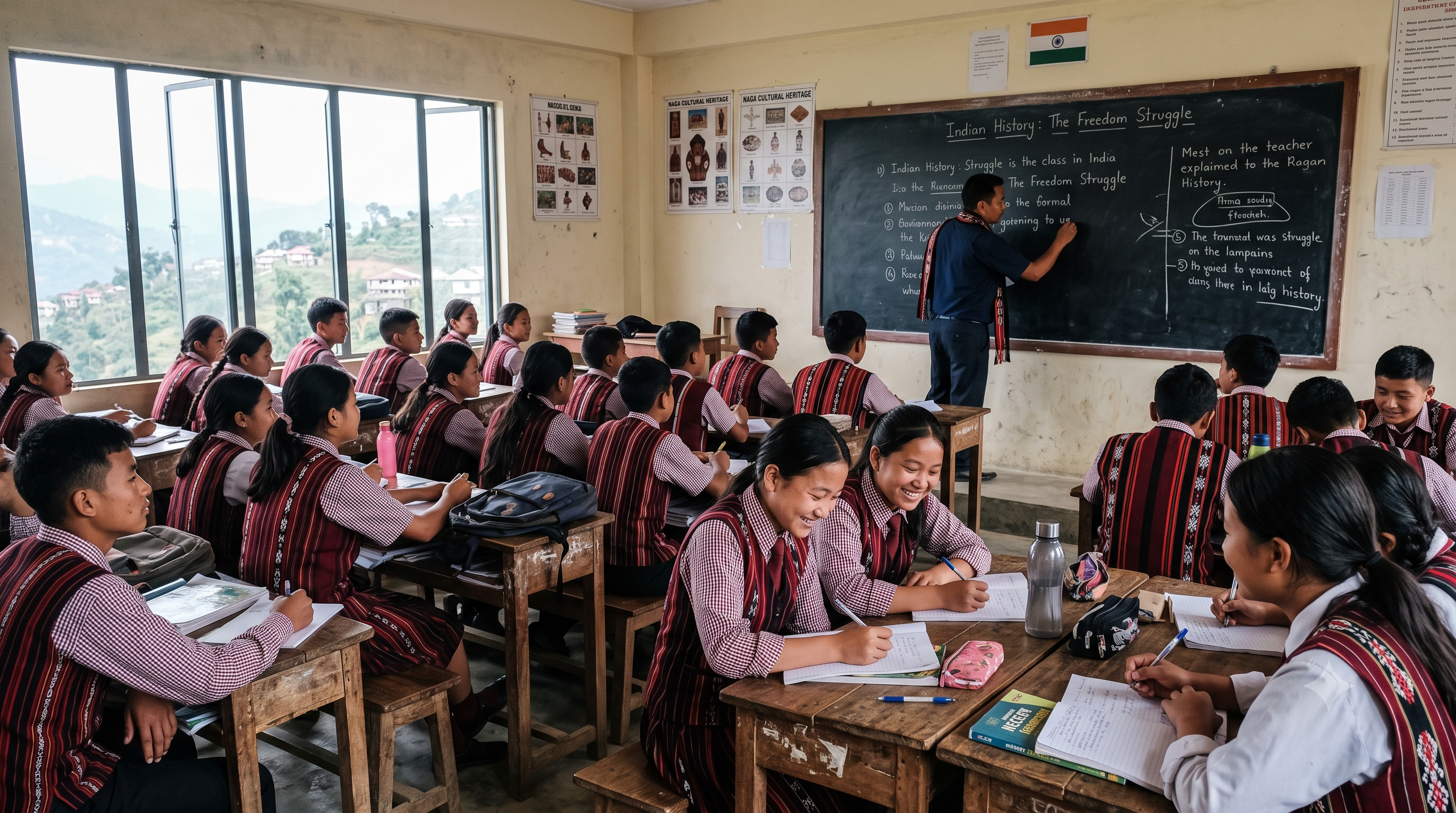
A comprehensive guide for college students across Nagaland fulfilling NEP 2020 internship credits. Explore verified host organizations across IT, commerce, social impact, and agriculture, plus an actionable NOC and viva toolkit.
With the progressive rollout of the National Education Policy (NEP 2020) and the Four Year Undergraduate Programme (FYUGP) across Nagaland University and autonomous colleges throughout the state, academic internships are no longer optional extracurricular pursuits. They are credit-bearing degree requirements.
Whether you study at Kohima Science College, St. Joseph University, Tetso College, Patkai Christian College, Fazl Ali College, or any affiliated higher education institution in the state, completing a documented internship or community immersion project is mandatory for graduation.
Yet, a frequent question remains: where can students actually secure a legitimate, credit-compliant internship within Nagaland?
This guide breaks down the credit requirements under the NEP framework, provides a vetted directory and quick-reference matrix of host institutions across four key disciplines, addresses district-level access, and delivers a practical toolkit to guide you from initial outreach to your final viva defense.
Understanding the NEP 2020 Internship Framework in Nagaland
Under the FYUGP curriculum guidelines implemented in Nagaland, undergraduate students are required to undertake internship training, field immersion, or community engagement projects—typically between Semesters 4 and 6, or during the summer recess.
Credit Allocation and Workload
Quick-Reference Matrix: Verified Host Organizations in Nagaland
| Host Organization | Academic Focus | Primary Location | Primary Outreach Method |
|---|---|---|---|
| instudia | BCA, B.Sc CS, B.Tech, UI/UX, Data | Dimapur | Online Application / Direct Campus Inquiry |
| NIELIT | CS, IT, Cyber Security, Electronics | Kohima & Chümoukedima | Direct Academic Division Inquiry |
| STPI Incubation Hubs | Software, Embedded Systems, Web | Kohima | Founder Outreach via Startup Portals |
| Local Chartered Accountant Firms | B.Com, BBA, Finance, Tally | Dimapur & Kohima | In-Person Office Dispatch with NOC |
| Nagaland State Co-operative Bank | B.Com, BBA, Rural Banking | Statewide Branches | In-Person Branch Manager Submission |
| YouthNet Nagaland | B.A., Social Work, Management | Kohima & Dimapur | YouthNet Career Desk / Email Portal |
| NSLSA & District Legal Authorities | Law, Social Justice, Sociology | District Court Complexes | Formal Application to Member Secretary |
| NSRLM (Rural Development) | Rural Dev, Social Work, Economics | Kohima & Block HQ | Directorate Dispatch Submission |
| ICAR Research Complex | Agri, Horticulture, Soil Science | Medziphema & Jharnapani | Formal Letter to Joint Director |
| Krishi Vigyan Kendras (KVKs) | Life Sciences, Agronomy, Botany | All 16 Districts | In-Person Submission at District KVK Office |
Sector-by-Sector Directory of Host Institutions
To fulfill university criteria, your host must be a legally recognized entity: a registered company, government department, statutory board, recognized educational or research facility, or registered society/trust.
1. Technology, Computer Applications, and Engineering (BCA, B.Sc CS, B.Tech)
Students in computer science and IT often struggle because large multinational IT firms lack physical development centers in Nagaland. However, high-value technical environments exist locally:
2. Commerce, Finance, and Business Management (B.Com, BBA, Economics)
For commerce and management students, local industry offers practical exposure to taxation, banking operations, inventory management, and financial audits:
3. Humanities, Social Sciences, and Social Work (B.A., BSW, Sociology, Political Science)
Social science candidates benefit from an active ecosystem of non-governmental organizations, legal bodies, and civil administration networks:
4. Agriculture, Forestry, and Life Sciences (B.Sc Agri, Botany, Zoology, Environmental Science)
Nagaland possesses premier scientific and agrarian field research facilities suitable for laboratory and field data collection:
Overcoming the District Gap: Guidance for Students Outside Dimapur and Kohima
More than half of Nagaland's college population studies in or travels from districts like Mokokchung, Tuensang, Mon, Phek, Wokha, Zunheboto, Kiphire, Longleng, Peren, or Noklak. Relocating to Dimapur or Kohima for a 4-week internship incurs high lodging and travel expenses.
If you are based in an outstation district, consider these vetted local alternatives:
Step-by-Step Toolkit for Securing Your College Internship
Securing an internship requires systematic planning. Do not wait for the semester deadline to scramble for documentation. Follow this structured process.
Step 1: Secure Your College No-Objection Certificate (NOC)
Before accepting any role, obtain an official NOC from your college.
- 1
Approach your Department Internship Coordinator or Head of Department (HoD) at least four weeks before your semester examinations.
- 2
Request the standard college NOC format, specifying the proposed organization, duration, and target dates.
- 3
Ensure the NOC is signed by the Principal or Dean. Host organizations require this letter to confirm you are an enrolled student covered under institutional purview.
Step 2: The Outreach Protocol (Digital vs. In-Person Dispatch)
A major bottleneck in Nagaland is the "email void." While modern startups and educational institutes respond swiftly to email, government directorates, public departments, and traditional commercial firms in Kohima and Dimapur rarely monitor unsolicited public inboxes.
Use the interactive Gmail-style composer below to customize your details, copy the message directly to your clipboard, or launch it in your mail client:
Step 3: Maintain Your Daily Logbook
A regular mistake among students is trying to write the entire internship report during the final week.
Step 4: The Final Report and Viva Voce
Your academic evaluation typically consists of an internal assessment (30% to 50%) and an external viva voce (50% to 70%).
Technical Internships at instudia (Dimapur)
For undergraduate students pursuing degrees in Computer Applications (BCA), Computer Science (B.Sc CS), Information Technology, or Graphic Design, securing a verified host with real technical mentorship can be challenging.
instudia runs credit-aligned student internship cohorts at its Dimapur facility. Interns work on live software projects, production web applications, database schema designs, and user experience audits under senior developer guidance.
Frequently Asked Questions (FAQ)
Are academic internships in Nagaland paid or unpaid?
Most academic internships under the NEP 2020 framework in Nagaland are unpaid. Host organizations provide training, supervision, and institutional verification in exchange for your project assistance. Certain funded startup initiatives or specialized survey roles may provide a travel allowance or modest stipend, but compensation should not be your primary expectation for mandatory credit clearance.
Can I complete an online or remote internship from an organization outside Nagaland?
Yes, provided your college department permits it in writing. Many departments accept remote internships from recognized national companies, provided there is a formal offer letter, regular verifiable digital check-ins, and a supervisor willing to submit an official evaluation form at the end of the term. Always check with your HoD before signing an agreement.
Can I do my internship at a relative's or family-owned business?
Universities strongly discourage interning with immediate family enterprises due to conflict of interest during grading. If you work with a family-associated firm, ensure it is a legally registered business (with GST or MSME registration) and obtain explicit prior approval from your college's internship committee.
What should I do if my host supervisor refuses to sign a daily logbook?
Organizations that rarely handle student interns may find daily signatures burdensome. In such cases, suggest having the supervisor sign a weekly summary sheet instead of daily lines, or request a single comprehensive performance report on company letterhead summarizing your hours and tasks upon completion.
When should I start applying for my semester internship?
Begin your outreach four to six weeks prior to your semester break. Waiting until exams conclude causes severe bottlenecks, as college administrative offices close for vacation and host institutions reach their student quotas.
Final Thoughts: Treat the Requirement as a Career Launchpad
Under the NEP 2020 curriculum, internships are not merely boxes to tick for your grade sheet. In a job market where employers increasingly prioritize demonstrable capability over theoretical exam marks, your internship report and completion certificate represent your first tangible proof of work.
Select an organization where you can engage in meaningful, hands-on tasks. Show up consistently, document your progress meticulously, and turn your mandatory semester credits into a lasting professional asset.

instudia Editorial Team
Academic & Career Team
ISO Certified Skill Institute
Official articles and curriculum guides prepared by instudia faculty and industry mentors in Dimapur.
Relevant Courses at Instudia