Why Diploma in Computer Applications (DCA) and PGDCA remain essential credentials in Nagaland, and how instudia is modernizing foundational computing by integrating real-world AI productivity tools starting next year.
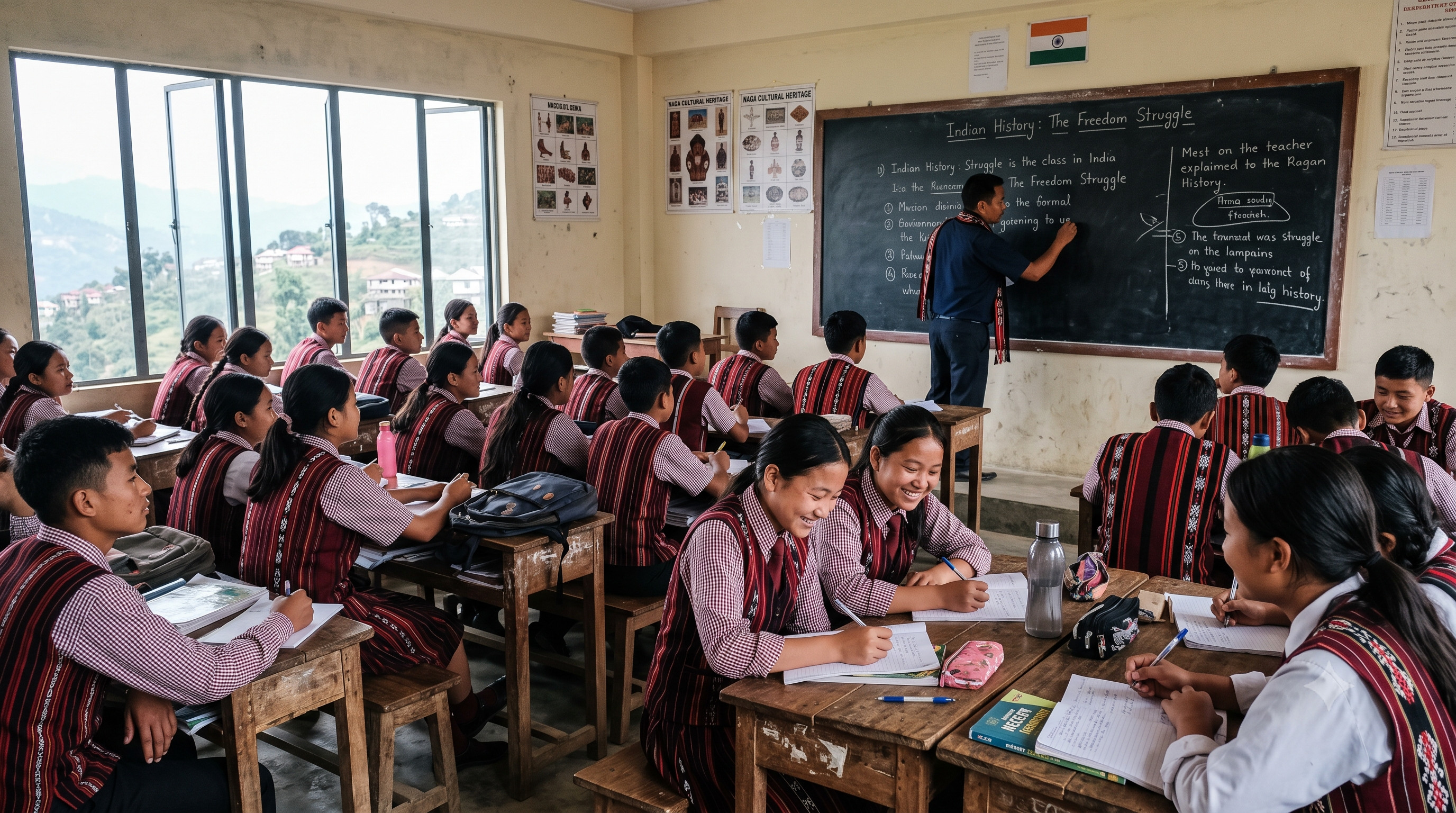
When students walk through our doors at instudia in Dimapur, a question frequently comes up during career counseling:
"In an era where everyone carries a smartphone and artificial intelligence is generating code, why do people still spend six months or a full year studying for a computer diploma?"
It is an understandable question on the surface. We have grown accustomed to touchscreens, social apps, and instant search queries. Many young people assume that because they can navigate an Android phone, manage a social feed, or look up information on Google, they already possess sufficient digital fluency for the workforce.
Then reality strikes.
A notification appears from the Nagaland Staff Selection Board (NSSB) or the Nagaland Public Service Commission (NPSC) for clerical, secretariat, or departmental computer assistant posts. The eligibility section states: Minimum six-month Diploma in Computer Applications (DCA) or one-year Post Graduate Diploma in Computer Applications (PGDCA) from a recognized institute.
A local logistics firm, a school administration office, an accounting practice, or a development agency invites candidates for an interview. During the practical screening, candidates are handed an unformatted dataset in Excel, asked to calculate running balances and generate summary tables, or tasked with drafting an official departmental rejoinder with standard margins and professional correspondence etiquette.
Suddenly, smartphone habits offer no shelter.
The gap between casual digital consumerism and structured, professional computing competence is vast. That gap is why DCA and PGDCA have remained the most sought-after vocational diplomas across Northeast India. However, the nature of administrative work is changing faster than ever before.
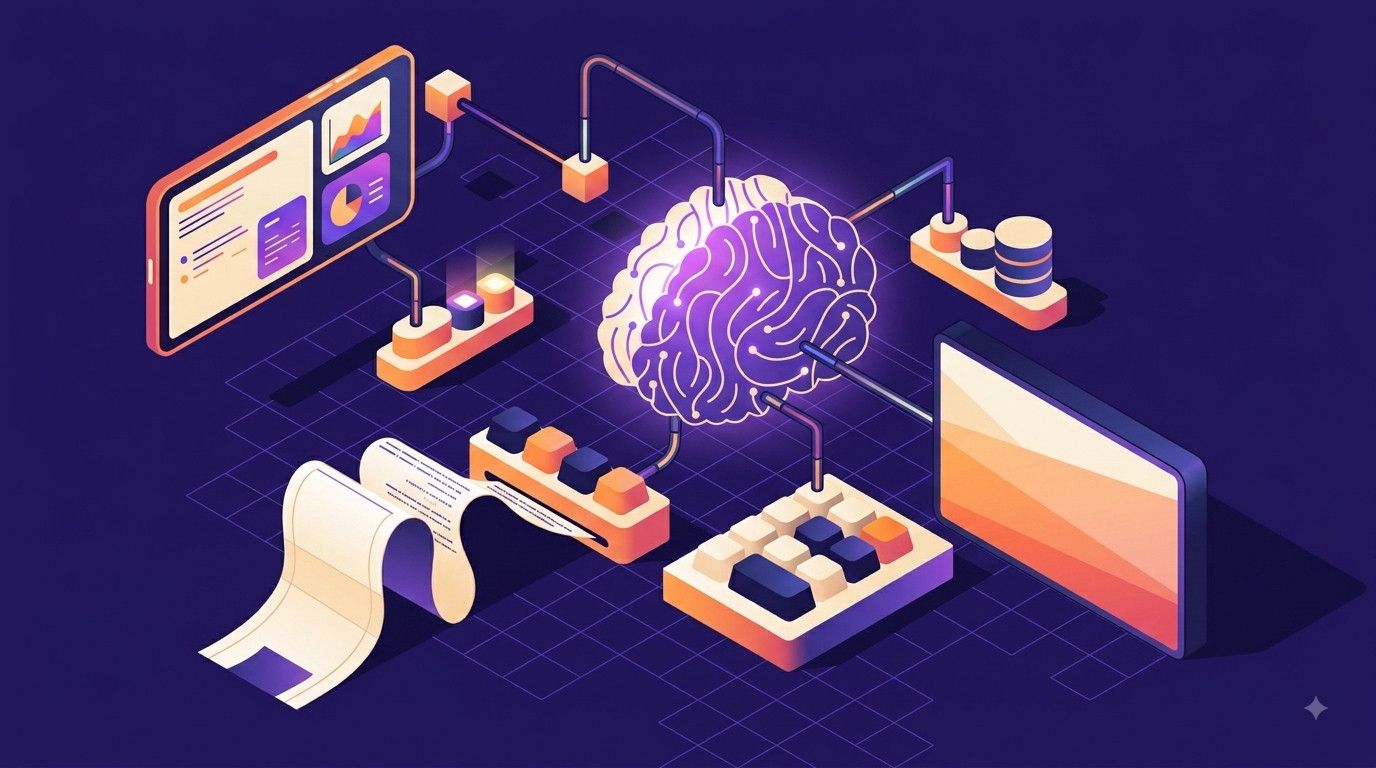
At instudia, we refuse to teach twenty-year-old habits to students who must work in the upcoming economy. Starting next year, in 2027, instudia is upgrading our Diploma in Computer Applications (DCA) curriculum to integrate practical, industry-grade artificial intelligence productivity tools directly into our foundational coursework.
Here is why DCA and PGDCA remain critical milestones, and how our upgraded curriculum will redefine what foundational digital literacy means.
The Baseline: What Are DCA and PGDCA Really About?
To make an informed decision about your education, it helps to understand what these two credentials represent and how they differ in scope and intent.
Diploma in Computer Applications (DCA)
The DCA is an intensive, six-month foundational program designed to take learners from zero technical experience to functional office independence. It is typically open to students after Class 10th or Class 12th, as well as college students and job aspirants who never received systematic computing training.
The core objective of DCA is practical office readiness:
- 1
Operating System Architecture: File hierarchies, directory organization, disk management, peripheral configurations, and operating system maintenance in Windows and Linux environments.
- 2
High-Speed Touch Typing: Building disciplined keyboard posture, ergonomic habits, and a verified baseline typing speed of 30 to 40 words per minute with 95 percent accuracy.
- 3
Document Engineering in Word Processors: Formatting official government communications, structuring multi-section reports, managing headers, tables, footnotes, mail merge operations, and publishing-ready documentation.
- 4
Spreadsheet Fundamentals: Building robust workbooks, understanding cell references (relative, absolute, and mixed), applying standard mathematical and statistical formulas, conditional formatting, and tabular data visualization.
- 5
Presentation Design: Communicating ideas visually through structured slide decks, master layouts, charts, and clean typography.
- 6
Digital Communication and Security Hygiene: Professional email drafting, cloud storage management (Google Drive, OneDrive), digital signatures, archiving, and cybersecurity hygiene against malware, phishing, and password vulnerabilities.
Post Graduate Diploma in Computer Applications (PGDCA)
The PGDCA is a comprehensive, one-year diploma tailored specifically for graduates from any academic discipline (BA, B.Sc, B.Com, BBA) who wish to transition into technical management, enterprise administration, or software operations.
While DCA focuses on front-office execution, PGDCA dives deeper into the technical engine of an organization:
- 1
Advanced Spreadsheet Modeling: Multi-criteria lookup operations (XLOOKUP, INDEX, MATCH), financial modeling, nested conditional logic, pivot tables, data slicers, and error handling.
- 2
Relational Database Management Systems (RDBMS): Relational database architecture, data normalization, and writing structured queries in SQL to store, update, filter, and extract operational records.
- 3
Programming Foundations: Computational thinking, algorithmic logic, control flows, and introductory programming in Python or basic web technologies.
- 4
Systems Administration and Networking: Local area networking basics, IP configurations, printer and peripheral sharing, user permissions, and basic IT troubleshooting.
- 5
Enterprise Business Workflows: Automating administrative routines, generating multi-source business intelligence reports, and understanding how modern software stacks support corporate governance.
The Silent Crisis in Traditional Computer Centers
While the demand for certified candidates has never waned, the quality of traditional computer training has deteriorated into a repetitive exercise in paper certification.
Walk into a standard computer training center today, and you will often observe an uncomfortable reality:
- 1
Obsolete Curricula: Students are taught on software interfaces that date back over a decade, practicing steps from yellowed manuals that have no bearing on how contemporary organizations function.
- 2
Rote Keyboard Drills: Learners are told to transcribe sample passages or memorize keystroke combinations for exams without ever understanding the underlying logic of file management, document design, or data integrity.
- 3
Zero Workplace Simulation: Very few classrooms challenge students with real-world scenarios. Students leave knowing how to change a font color in Microsoft Word, but they do not know how to format a formal memorandum, reconcile an invoice discrepancy in Excel, or organize a shared company drive without creating chaos.
In 2026, receiving a paper certificate without practical competence is dangerous. Employers in Nagaland and across the country no longer have the luxury of hiring people who require months of hand-holding for routine tasks. When a department or business recruits an office assistant, they expect that person to sit at their terminal on day one and produce accurate, polished work.
The arrival of modern artificial intelligence tools has accelerated this expectation. In modern workplaces, administrative staff are expected to work smarter, synthesize information faster, and eliminate hours of manual grunt work.
The Next Step: Bringing AI Tools into DCA at instudia Starting in 2027
At instudia, we have always held a firm principle: our syllabus must reflect what the professional ecosystem requires tomorrow, not what was sufficient ten years ago.
For students enrolled in software development, we teach modern stacks such as Python Programming and Fullstack Web Development. For finance aspirants, we provide rigorous instruction in Tally Prime with GST.
Starting in January 2027, we are extending this forward-looking standard to our foundational program. We will officially incorporate practical, assistive AI tools into the Diploma in Computer Applications (DCA).
This enhancement does not mean replacing foundational computing skills. Students will still spend hours mastering touch typing, formatting documents by hand, writing spreadsheet formulas from scratch, and organizing operating system directories. You cannot supervise an automated tool if you do not understand the underlying principles of the task it is performing.
Instead, we are augmenting traditional computer applications with the exact workflow multipliers modern offices use every day.
What the AI-Augmented DCA Curriculum Looks Like
Here is an overview of how artificial intelligence tools will be integrated into the modules of our six-month DCA program starting next year:
1. Executive Document Drafting and Communication
Traditional DCA covers typing letters and setting paragraph indentations. Our upgraded curriculum teaches students how to use AI writing assistants as structured drafting partners:
- 1
Drafting Official Correspondence: Formulating clear prompts to generate formal government memorandums, official letters, meeting minutes, press releases, and circulars matching administrative protocols.
- 2
Tone and Grammar Calibration: Using language models to adjust document register from informal drafts to polite executive correspondence or formal legal responses.
- 3
Document Synthesis: Uploading multi-page policy drafts or project proposals and commanding the assistant to extract key deliverables, bulleted action items, and compliance deadlines without missing critical details.
2. Intelligent Spreadsheet Modeling and Formula Engineering
One of the largest hurdles for beginners in Excel is formula syntax. Remembering how to combine INDEX, MATCH, and nested IF statements can take weeks of trial and error.
In our AI-augmented track, students learn formula construction from both directions:
- 1
Natural Language Formula Generation: Translating plain-English business questions into exact spreadsheet formulas. For example: "Write an Excel formula to look up an employee code from Column A in Sheet 2 and return their verified basic salary from Column E, returning 'Record Not Found' if the code is invalid."
- 2
Automated Data Cleaning: Using AI prompt routines to identify duplicate entries, normalize non-standard phone numbers and names, and split concatenated address lines in minutes.
- 3
Financial Summary Synthesis: Instructing AI tools to analyze raw numerical ledgers and generate descriptive interpretations of revenue patterns, top expense categories, and monthly variances.
3. Rapid Presentation Architecture and Research
Presentations in contemporary offices are not about decorative clipart; they are about communicating operational data concisely to decision-makers.
- 1
Slide Structure Generation: Taking a dense 10-page project brief or institutional report and prompting AI tools to outline a logical, 6-slide presentation structure with crisp headlines and executive bullet points.
- 2
Data Visual Selection: Identifying the most appropriate chart types (bar, line, stacked column, or scatter) based on the nature of the data, rather than guessing blindly.
- 3
Presentation Polish: Refining slide text to ensure strict adherence to executive presentation standards: one main message per slide, high signal-to-noise ratio, and no wall-of-text formatting.
4. Verification, Hallucination Auditing, and Data Security Ethics
This is perhaps the most important module of our new curriculum. Giving a beginner an AI tool without teaching verification is like giving someone a vehicle without teaching them how to brake.
Every student will undergo strict training in:
- 1
Hallucination Auditing: Cross-checking every fact, figure, name, and citation generated by an AI assistant against original primary source records.
- 2
Organizational Data Privacy: Understanding strict boundaries around confidentiality. Students will learn why sensitive government records, private citizen identities, payroll sheets, and proprietary financial ledgers must never be pasted into public, unvetted AI engines.
- 3
Human Accountability: Instilling the foundational professional ethic that an AI tool does not take responsibility for work; the person who signs the document or submits the spreadsheet owns every single character and calculation.
DCA vs. PGDCA: Which Program Should You Choose?
Whether you are stepping out of high school or holding a university degree, choosing the right diploma depends on your academic qualifications and immediate career objectives.
| Factor | Diploma in Computer Applications (DCA) | Post Graduate Diploma in Computer Applications (PGDCA) |
|---|---|---|
| Duration | 6 Months (Fast-Track & Regular Options) | 12 Months (Two Semesters) |
| Eligibility | Class 10th or 12th Pass | Graduation in any stream (BA, B.Sc, B.Com, BBA) |
| Primary Focus | Practical office productivity, touch typing, MS Office, and AI workflow integration | Advanced data analysis, relational databases (SQL), system administration, and programming foundations |
| Software & Tools | Windows/Linux OS, MS Word/Docs, MS Excel/Sheets, PowerPoint, AI Productivity Tools | Advanced Excel, SQL/MySQL, Python Fundamentals, Networking Protocols, Business Workflows |
| Target Career Roles | Computer Operator, Data Entry Executive, Office Assistant, Administrative Coordinator | Junior Systems Associate, Database Assistant, IT Coordinator, Senior Office Executive |
| Government Eligibility | Fulfills 6-month computer diploma prerequisites for NSSB, banking clerical, and state departmental recruitments | Fulfills 1-year postgraduate computer diploma prerequisites for specialized and gazetted technical posts |
| instudia Advantage | 1-to-1 computer lab allocation, hands-on typing targets, modern AI productivity tooling, ISO certification | In-depth practical lab projects, database queries on real datasets, technical interview mentorship |
If your goal is to acquire immediate, robust office computing competence, satisfy competitive exam qualification criteria, and master modern workplace tools, the DCA program provides the most direct and practical path.
If you have completed your degree and want to build a substantial technical bridge toward enterprise IT management, database oversight, or software systems, the PGDCA program delivers the extended depth you require.
Why Study at instudia in Dimapur?
A certificate carries value only when the individual holding it can prove their skills on demand. At instudia, our educational environment is built around accountability and tangible results:
- 1
Dedicated Workstations: Every learner is assigned their own individual terminal during practical sessions. There is no sharing screens or watching an instructor from the back of a lecture hall.
- 2
Mentor-Led Practical Labs: Our faculty members are practitioners who provide immediate feedback as you build documents, debug formulas, and practice AI prompts.
- 3
Rigorous Typing Certification: We do not issue completion certificates based solely on attendance. Students must demonstrate verified touch typing speed benchmarks under timed conditions.
- 4
ISO 9001:2015 Quality Standards: Our diplomas and transcripts carry recognized certification that conforms to national quality benchmarks, giving you confidence when submitting credentials to government boards or corporate recruiters.
- 5
Central Location: Situated conveniently in Dimapur, our campus provides an accessible learning environment with reliable high-speed connectivity and continuous power backup.
Preparing for the 2027 Workplace
The narrative that artificial intelligence will make human workers obsolete misses the true point of this technological transition. AI is not going to replace office administrators, accountants, or executives.
However, administrators, accountants, and executives who know how to wield AI tools will comfortably outperform those who refuse to adapt.
By combining timeless computing fundamentals—typing speed, file discipline, and spreadsheet logic—with modern artificial intelligence tooling, instudia is ensuring that our students in Nagaland do not just keep pace with national standards. We are preparing them to lead with confidence, capability, and unshakeable practical skill.
Admissions for our upcoming 2027 batches for Diploma in Computer Applications (DCA) and Post Graduate Diploma in Computer Applications (PGDCA) are opening soon.
Visit our campus in Dimapur or get in touch with our academic counseling team through our contact page to learn more about schedules, syllabus details, and workstation availability. Your digital career upgrade begins with the right foundation.

Daniel Changkija
Director
Visionary leader driving instudia's mission to bridge the tech skills gap in Nagaland.
Relevant Courses at Instudia